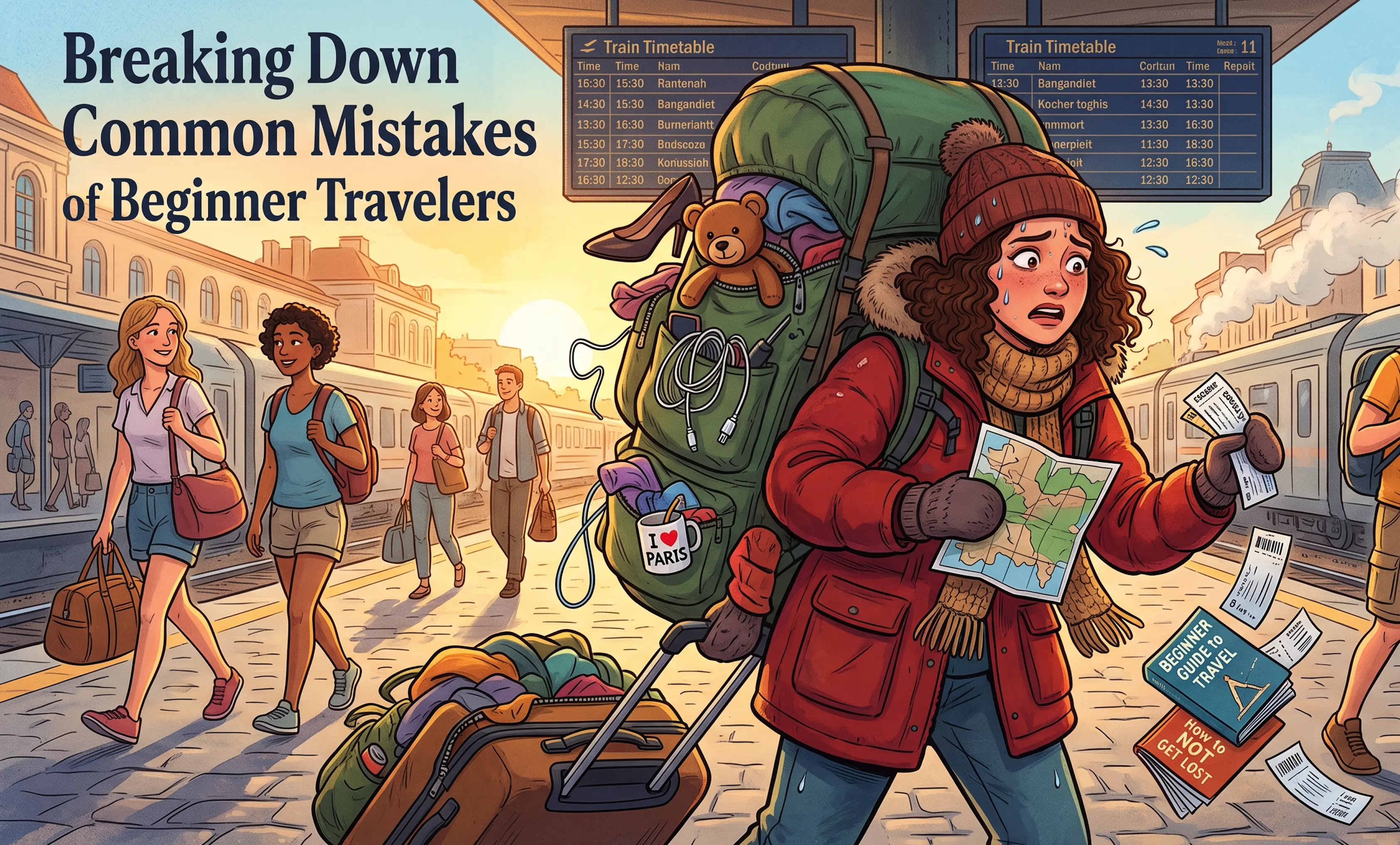
We all have to start somewhere. The first few times you head out into the wilderness or embark on a multi-city backpacking trip, you are bound to make mistakes. It is part of the learning process. However, some mistakes can quickly turn a dream vacation into a painful, exhausting ordeal. Let's break down the most frequent errors we see beginner travelers make and how to avoid them.
1. The Burden of Overpacking
This is undeniably the number one mistake. When you lack experience, you pack for your *fears*, not your *needs*. "What if it snows?" "What if we go to a fancy restaurant?" "What if I need three different jackets?"
In the world of outdoor travel and backpacking, ounces equal pounds, and pounds equal pain. Every extra item you carry is energy drained from your legs. Learn to embrace minimalism. Adopt a modular layering system instead of packing individual bulky coats, and realize that it is perfectly fine to wear the same hiking pants for three days straight.
Pro Tip: After your next trip, take everything out of your bag and put it in two piles: "Things I Used" and "Things I Didn't." Leave the second pile at home next time.
2. Underestimating the Terrain and Micro-Climates
Looking at a map and seeing a trail that is "only 5 miles" can be incredibly deceptive. Five miles on a flat, paved path is a leisurely stroll. Five miles navigating a steep, rocky incline with a 2,000-foot elevation gain while carrying a 30-pound pack is a grueling workout.
Furthermore, beginners often check the weather for the nearest town, failing to realize that temperatures drop significantly at higher altitudes. A sunny 70°F day at the base of the mountain can easily translate to freezing, windy conditions near the summit. Always pack a windbreaker and an insulating layer.
3. Ignoring Footwear Break-In Periods
Never, under any circumstances, take brand-new hiking boots on a long trip. Your feet will end up covered in blisters, effectively ending your adventure on day one. Buy your footwear weeks in advance and wear them around your house, to the grocery store, and on short local walks to break them in and ensure a proper fit.
By keeping these simple concepts in mind, you will dramatically increase your comfort and enjoyment on the trail. The wild is forgiving to those who prepare.